
Introduction: Why Crude Oil Prices Matter
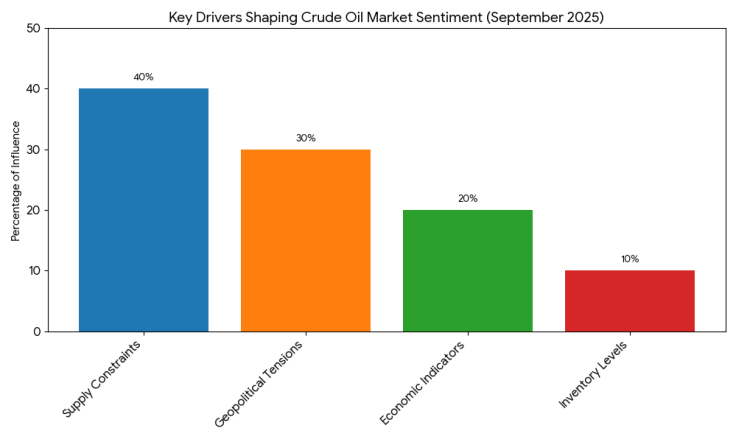
Crude oil is one of the most actively traded commodities globally, influenced by supply and demand dynamics, geopolitical events, and economic trends. As of September 26, 2025, West Texas Intermediate (WTI) crude oil is trading at approximately $65.20 per barrel. Here’s a simple breakdown of the key drivers shaping the oil market.
1. Supply Constraints – 40% Influence
The primary factor affecting oil prices is the supply of crude oil.
- OPEC+ countries have struggled to meet production targets, producing about 500,000 barrels per day less than planned.
- U.S. oil production is near record levels at around 13.5 million barrels per day, slightly below historical highs.
Example: In 2019, OPEC+ cuts of 1.2 million barrels per day helped stabilize falling oil prices, showing how supply restrictions can support prices.
Simple takeaway: When oil supply is limited, prices tend to rise.
2. Geopolitical Tensions – 30% Influence
Political and military events in key oil-producing regions can create uncertainty and affect prices.
- Russia’s partial bans on diesel and gasoline exports have tightened global supply.
- Iraq’s resumption of Kurdistan oil exports adds supply to the market, which can ease price pressure.
Example: Russia’s invasion of Ukraine in February 2022 caused a supply shock, pushing Brent crude prices up by almost 30% in just two weeks, briefly exceeding $120 per barrel.
Simple takeaway: Political or military issues can disrupt oil supply, leading to price volatility.
3. Economic Indicators – 20% Influence
Global economic growth and the strength of the U.S. dollar influence oil prices.
- Strong U.S. GDP growth supports higher energy demand.
- A stronger U.S. dollar can make oil more expensive for buyers using other currencies, which may slightly reduce demand.
Simple takeaway: Strong economies increase oil demand, but a strong dollar can make oil costlier for global buyers.
4. Inventory Levels – 10% Influence
Oil stored in tanks and strategic reserves affects prices in the short term.
- U.S. crude inventories were 4.4% below the seasonal 5-year average in September 2025, indicating tighter supply.
Example: During the COVID-19 pandemic in 2020, U.S. crude oil inventories surged to record levels due to a collapse in demand. This oversupply contributed to the historic negative WTI price event in April 2020.
Simple takeaway: Lower inventories suggest tighter supply, which supports higher prices.
Market Outlook
The market sentiment for WTI Crude Oil is bullish, with supply constraints, geopolitical tensions, and strong economic indicators supporting prices. However, the strengthening U.S. dollar and increased supply from Iraq’s Kurdistan region may moderate short-term gains.
Conclusion
Focus on four main factors: supply, geopolitical events, economic indicators, and inventory levels. Historical examples show how each can influence prices, helping you make more informed trading decisions.
Leave a Reply